Does Posting Consistency Matter More Than Timing?
Yes — a predictable posting schedule outperforms sporadic perfect-timing posts almost every time. Accounts posting three to five times per week on a regular cadence consistently outperform accounts posting seven-plus times per week at random intervals, because Instagram's algorithm rewards predictable content calendars over raw volume.
The reason is structural. When you publish on a repeating weekly rhythm, the algorithm learns when to expect your content and begins surfacing it to followers who are habitually active at those hours. Your audience builds the same habit: they start checking for your posts at specific times, which front-loads early engagement signals and pushes distribution further.
Building Your Weekly Rhythm
The practical move is to pick three to five fixed posting slots — say, Tuesday at 11 AM, Wednesday at 6 PM, and Friday at 12 PM — and hold them for at least four weeks before evaluating results. Switching times every few days gives neither the algorithm nor your audience enough data to form a pattern.
An account posting three times weekly at good-but-not-ideal times will outperform one that posts once weekly at the theoretically perfect moment. Frequency and regularity compound over weeks in ways that a single optimized post cannot.
Lock in 3–5 posting slots per week and hold them for a month. Consistency trains the algorithm to expect your content — and your audience to check for it.
Use the timing data from this article to set your initial schedule, then let your Instagram Insights refine it over time. The best posting schedule is the one you actually maintain.
Does the Time You Post on Instagram Really Matter?
Yes — the Instagram algorithm evaluates engagement within the first 30 to 60 minutes after you publish. Posts that collect likes, comments, shares, and saves quickly are far more likely to be pushed to the Explore page and the Reels tab. According to Sprout Social, early engagement signals are one of the strongest predictors of whether content reaches audiences beyond your existing followers.
This is where the micro-window concept becomes important. Posting 15 to 30 minutes *before* your audience's peak activity gives the algorithm time to index and begin distributing your content right as people start scrolling. If you post at the exact moment everyone is online, the algorithm has already missed that initial evaluation window — and your post competes with a flood of fresh content.
That said, timing is a multiplier, not a replacement for quality. A mediocre carousel published at 11 AM on Tuesday will still underperform a genuinely useful Reel posted at a slightly off-peak hour. The difference is that strong content posted at the *right* time consistently outperforms identical content published at random.
If your account feels stagnant despite good content, why your Instagram account looks dead is worth reading — timing is often one of several compounding issues.
Pro Tip: Think of timing as a multiplier, not a magic formula. Great content posted at the wrong time still underperforms — but poor content posted at the perfect time won't save it either.
Understanding how Instagram's algorithm works helps explain why even a 30-minute shift in your posting schedule can meaningfully change your engagement rate.
How Do You Find Your Best Time to Post on Instagram?
The fastest way to find your personal best posting time is through Instagram Insights — the built-in analytics dashboard available on every Professional (Business or Creator) account. Global averages are a solid starting point, but your actual followers may be most active at different hours depending on their timezone, age group, and daily routines.
Having operated in the SMM space for 13+ years, we've watched Instagram's analytics tools evolve — and the current Insights dashboard is the most reliable source for personalized timing data.
Here is the exact walkthrough to find your audience's peak hours:
- Switch to a Professional account if you haven't already — tap Settings → Account type and tools → Switch to Professional account
- Open Instagram Insights — go to your profile, tap the Insights button (or the menu → Insights)
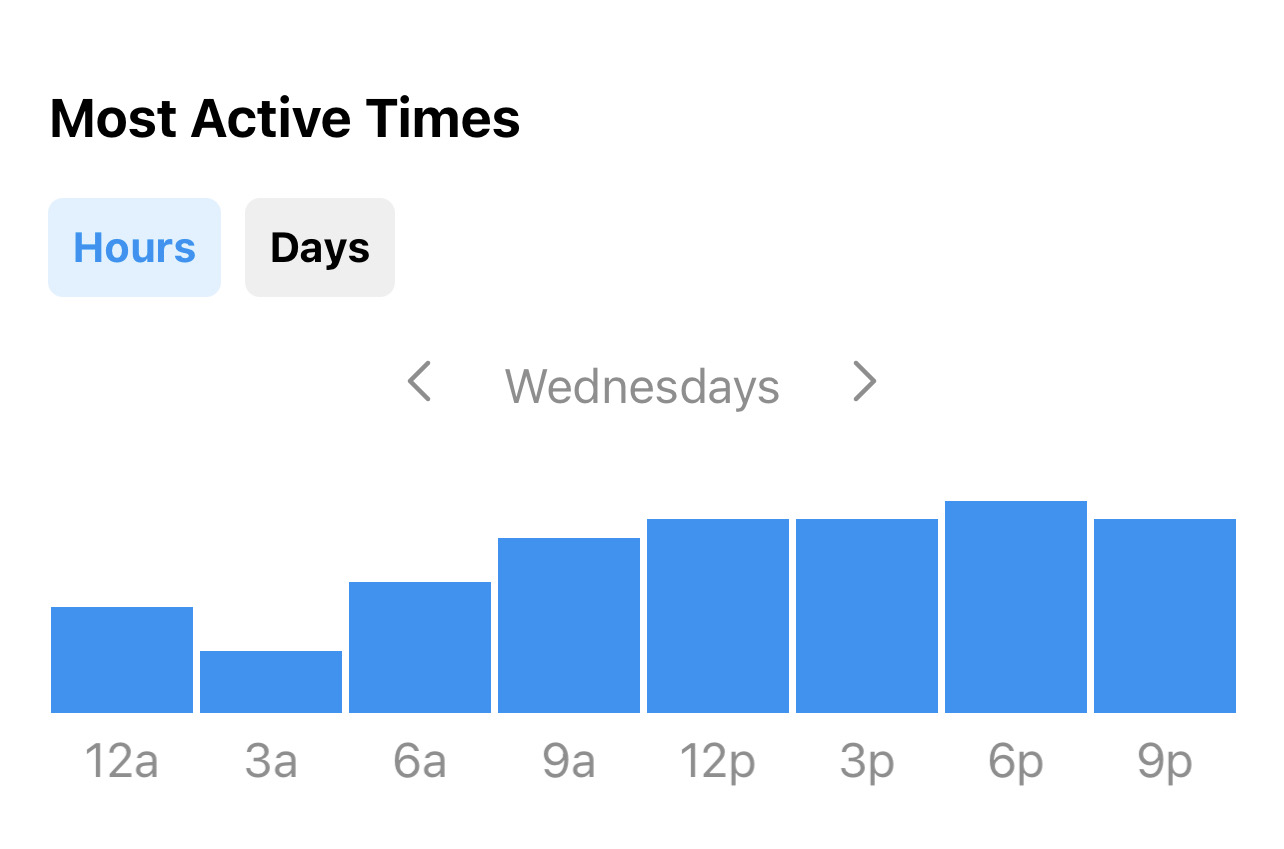
- Navigate to your audience data — tap Total Followers → scroll to Most Active Times
- Read the heatmap — Instagram shows a bar chart of your followers' activity by hour for each day of the week. The tallest bars indicate peak windows
- Apply the 15-minute head start — schedule your posts 15–30 minutes before your highest-activity hour so the algorithm has time to index your content before the audience surge
Pro Tip: Post 15–30 minutes before your peak window. This gives the algorithm time to index and surface your content right as your followers open the app.
Once you identify your top three time slots, test them for at least two weeks. Track reach, engagement rate, and saves for each slot. If one consistently outperforms the others, make it your primary posting window.
For deeper scheduling analytics, third-party tools like Later, Sprout Social, and Iconosquare offer historical performance breakdowns and auto-scheduling based on your audience data. If you're just getting started with the platform, our Instagram beginner's guide walks through setting up a Professional account step by step.
 Consistency beats volume — follow a rhythm your audience can anticipate.
How Does Instagram's Algorithm Use Posting Time in 2026?
Instagram's 2026 algorithm does not treat all content formats equally — Reels, feed posts, and Stories each have a different distribution window and a different weight placed on early engagement. According to Instagram's official Creator documentation, the platform ranks content based on recency, relationship, and interest signals — making the first engagement window after posting critical for distribution. Understanding these format-specific ranking signals helps explain why the same posting time can produce very different results depending on what you publish.
Feed Posts: The 60-Minute Window
Traditional feed posts (single images and carousels) are evaluated primarily within the first 60 minutes after publishing. The algorithm measures likes, comments, saves, and shares during this window to decide whether to push the post higher in follower feeds and into the Explore tab. Posting when your audience is already active — or 15–30 minutes beforehand — directly influences this initial scoring phase.
Reels: The 24–48 Hour Discovery Cycle
Reels operate on a longer timeline. Even if early engagement is modest, the algorithm continues testing Reels content with new audience segments for 24–48 hours. The key ranking signal introduced in 2026 is Sends Per Reach — shares divided by total reach.
Sends Per Reach = Shares / Reach. Content that scores high on this metric in the first few hours gets pushed to Explore and the Reels tab automatically. Focus on creating share-worthy Reels, not just likeable ones.
Content that generates a high ratio of forwards relative to views gets amplified to progressively broader audiences. This is why Reels engagement peaks later in the evening — users are more likely to share entertaining content during leisure hours than during a work-break scroll.
Stories: The 24-Hour Decay
Stories disappear after 24 hours, and the algorithm front-loads visibility within the first 1–2 hours of posting. Accounts that post Stories consistently train the algorithm to prioritize their story ring at the top of followers' feeds. Spreading 3–5 Stories across the day (morning, lunch, evening) keeps your ring active longer than publishing them all at once.
Upload Quality as a Ranking Factor
Instagram's 2026 system also factors in upload quality for Reels. High-resolution video (1080×1920 minimum) uploaded natively — rather than compressed through third-party apps — receives preferential placement in the Reels tab. Pairing strong timing with high-quality uploads creates a compounding advantage that low-effort content cannot match.
How Does Posting Time Differ by Niche and Industry?
Industry-specific timing can shift peak engagement by 2–3 hours compared to global averages. According to Iconosquare's niche research, the best time to post on Instagram depends heavily on your audience's daily routine — and routines vary drastically between a fitness coach's followers and an e-commerce brand's shoppers.
The logic is straightforward: your audience checks Instagram when their lifestyle allows it. Fitness audiences wake up early and engage before their workout. Food and restaurant followers browse during mealtimes. Tech audiences scroll during work breaks. When you understand your niche audience's daily patterns, you can align your posting schedule to match their behavior instead of relying on generic windows.
| Niche | Best Days | Best Times | Why |
|---|---|---|---|
| E-commerce | Tue, Wed, Thu | 11 AM–1 PM, 7–9 PM | Lunch-break browsing, evening shopping |
| Fitness | Mon, Tue, Wed | 5–7 AM, 12 PM | Pre-workout motivation, lunch check-in |
| Food & Restaurants | Fri, Sat, Sun | 11 AM–1 PM, 5–7 PM | Mealtimes and weekend dining planning |
| Travel | Thu, Fri, Sat | 9–11 AM, 8–9 PM | Trip planning and evening wanderlust |
| Tech & SaaS | Tue, Wed, Thu | 9–11 AM, 2–4 PM | Work hours, professional breaks |
| Fashion & Beauty | Mon, Wed, Fri | 12–2 PM, 7–9 PM | Lunch-break shopping, evening scrolling |
| Education | Tue, Thu | 8–10 AM, 4–6 PM | Before class, after school/work |
According to Outfy's social media timing data, e-commerce brands that post during lunch breaks see measurably higher click-through rates because users are primed for quick browsing and purchasing decisions.
Global averages are starting points — your niche may be different. Use Instagram Analytics to compare your actual engagement patterns against these benchmarks. A fitness brand posting at 8 PM because "that's the global best time" will miss its core audience entirely.
We have found that accounts which track their niche-specific timing through Instagram Insights and adjust their posting schedule every 4–6 weeks consistently outperform those who set a schedule once and never revisit it.
 Audience behavior differs drastically between niches — always verify with Insights.
The Short Answer: Best Times to Post on Instagram
The best time to post on Instagram in 2026 is Tuesday through Thursday, between 9 AM and 1 PM in your local timezone. An evening window from 5 PM to 9 PM is also consistently strong. These findings come from aggregated data covering 9.6 million+ Instagram posts, with Buffer's 2026 analysis serving as the largest single dataset.
The three highest-engagement days are Tuesday, Wednesday, and Thursday, and the three most reliable time slots are 11 AM–1 PM (lunchtime scroll), 5 AM–7 AM (early morning, low competition), and 7 PM–9 PM (evening surge).
Key Takeaways: - Best days: Tuesday, Wednesday, Thursday - Best times: 9 AM–1 PM and 7–9 PM local time - Early morning (5–7 AM) is a low-competition window worth testing - Always verify with your own Instagram Insights — global averages are starting points
Below, we break it down day by day, by format (Reels, Stories, feed posts), and by niche — so you can build a posting schedule backed by real data, not guesswork.
Start Posting at the Right Time This Week
Timing is a multiplier, not a magic formula. According to Buffer's analysis of 9.6 million posts, Tuesday through Thursday, 9 AM–1 PM local time is the strongest general window — but your ideal posting schedule depends on your specific audience, niche, and content format.
Open your Instagram Insights, identify your followers' most active hours, and lock in three to five weekly posting slots. Hold that schedule for a month. Consistency compounds: the algorithm learns your rhythm, your audience expects your content, and early engagement signals stack in your favor.
If you want to accelerate that feedback loop, pairing optimized timing with stronger early engagement makes each post work harder from the first minute it goes live.
✓
Ready to amplify your reach? Combine smart timing with real engagement momentum — boost your engagement signals and give every post the early traction the algorithm rewards.
What Is the 5-3-1 Rule on Instagram?
The 5-3-1 rule is a content ratio framework: for every 9 posts, publish 5 value-driven posts, 3 engagement or community posts, and 1 promotional post. According to Sprout Social's 2026 content benchmarks, accounts following a structured content ratio see up to 30% more consistent engagement than those posting without a category plan. This ratio keeps your feed educational and interactive while giving you room to promote products or services without overwhelming your audience.
The connection between the 5-3-1 rule and posting time is often overlooked. When you combine this content calendar framework with optimized posting windows, each post type lands when the right audience behavior is active. Value content performs well during morning and lunchtime windows (9 AM–1 PM) when users seek information. Engagement posts — polls, questions, carousels that invite discussion — work best during evening hours (6–9 PM) when people have time to interact. Promotional posts benefit from mid-week lunch windows when purchase intent tends to peak.
The 5-3-1 Rule Defined: 5 value posts (tips, tutorials, data) + 3 engagement posts (polls, questions, community content) + 1 promotional post (product, service, offer). Repeat every 9-post cycle.
Here is how to implement the 5-3-1 rule alongside your timing strategy:
- Map your 9-post cycle to your weekly schedule — if you post 3 times per week, one full cycle takes 3 weeks
- Assign value posts to your highest-reach time slots — Tuesday and Wednesday mornings work well for educational content
- Schedule engagement posts for evening windows — when your audience has time to comment and interact
- Place your promotional post mid-week — Wednesday or Thursday between 11 AM and 1 PM, when browsing and purchase intent overlap
- Track performance per post type — use Instagram Insights to confirm which timing works for each category
In our experience working with Instagram creators since 2013, accounts that follow the 5-3-1 ratio alongside optimized posting times see more consistent engagement than those who focus on timing alone. The ratio prevents content fatigue — followers stay engaged because they are not seeing the same type of post every day. Pairing this with crafting strong captions makes each post in the cycle more effective.
A social media strategy that combines content variety with timing precision avoids the common trap of posting great content at the wrong moment — or posting at the perfect time with content your audience has already tuned out.
What Is the Best Day of the Week to Post on Instagram?
Tuesday and Wednesday are the best days to post on Instagram in 2026, consistently outperforming other weekdays across multiple studies. According to Sendible's 2026 analysis, weekdays outperform weekends by 15–20% in average reach metrics.
The reason is straightforward: mid-week audiences are in a routine. People scroll during commutes, coffee breaks, and lunch hours — creating predictable engagement windows. By Thursday, attention starts fragmenting as the weekend approaches. By Saturday, users are outdoors, traveling, or socializing offline.
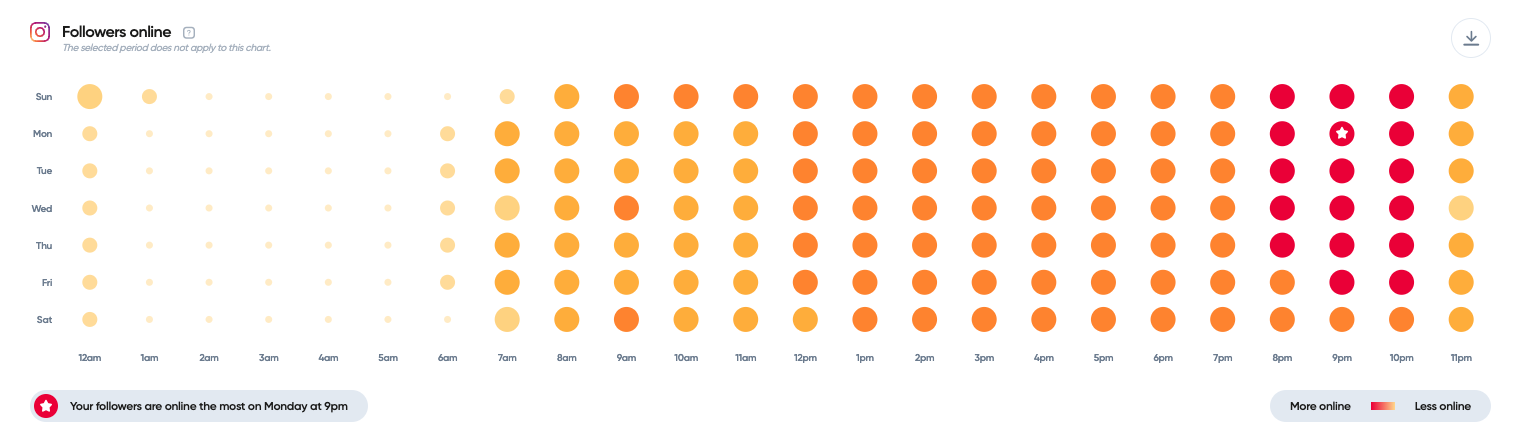 Global engagement heatmap reveals clear morning and evening peaks in 2026 activity patterns.
| Factor | Weekdays (Tue–Thu) | Weekends (Sat–Sun) |
|---|---|---|
| Average reach | Higher (+15–20%) | Lower baseline |
| Engagement rate | Peaks at lunchtime | Spread across midday |
| Competition | Higher volume of posts | Lower volume |
| Best for | B2B, education, tech, fitness | Lifestyle, travel, food |
| Posting window | 9 AM–1 PM, 6–9 PM | 9 AM–3 PM |
That said, weekends are not a dead zone. The best time to post on Instagram Saturday and Sunday — typically 9 AM to 3 PM — sees lower volume, which means less competition per post. Niche matters here: lifestyle, food, and travel accounts often see their strongest per-post engagement on weekends, when their audience has time to browse and interact.
Pro Tip: Don't abandon weekends entirely. If your niche is lifestyle-oriented, Saturday and Sunday posts face less competition and can generate higher per-post engagement — even if total reach is lower than mid-week.
The practical takeaway: schedule your most important content for Tuesday through Thursday, then use weekends for lighter, community-driven posts that keep your posting cadence consistent.
What Is the Best Time to Post on Instagram in 2026?
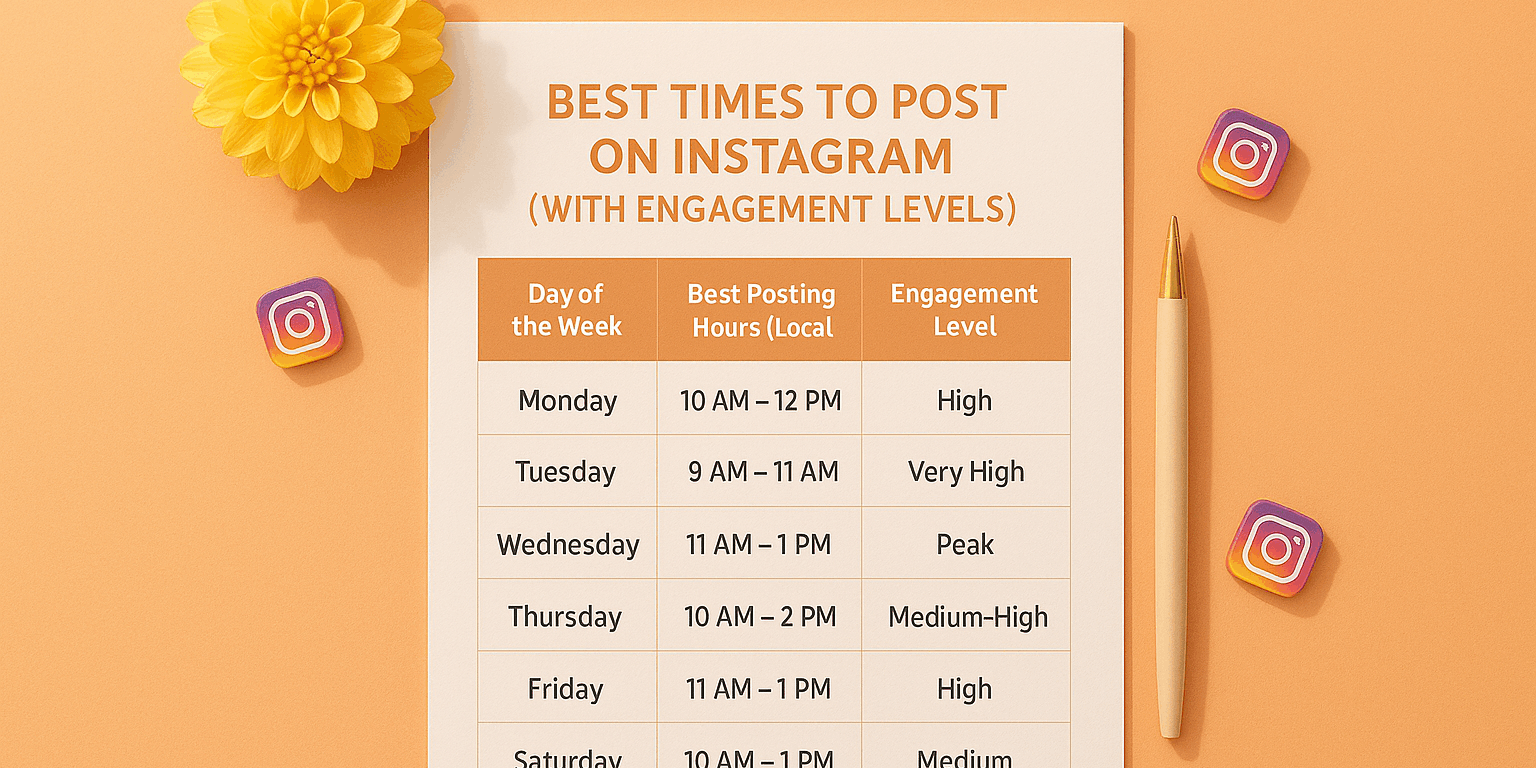
The best time to post on Instagram in 2026 is between 9 AM and 1 PM on weekdays, with Tuesday and Wednesday showing the highest engagement rates. The data below aggregates findings from Buffer (9.6 million posts), Hootsuite, Sendible, and Sprout Social — all updated for 2026.
All times are in your local timezone. Instagram Insights reports audience activity in your account's local time, and these aggregated studies normalize to the same standard.
| Day | Best Times | Peak Window |
|---|---|---|
| Monday | 5 AM, 11 AM, 7–8 PM | Lunchtime + evening |
| Tuesday | 10 AM, 3 PM, 7 PM | Mid-morning through evening |
| Wednesday | 11 AM, 1 PM, 6 PM | Lunchtime peak |
| Thursday | 8 AM, 9 AM, 9 PM | Early morning + late evening |
| Friday | 10 AM, 12 PM, 8 PM | Late morning + evening |
| Saturday | 9 AM–3 PM | Extended midday window |
| Sunday | 9 AM–3 PM, early evening | Midday + early evening |
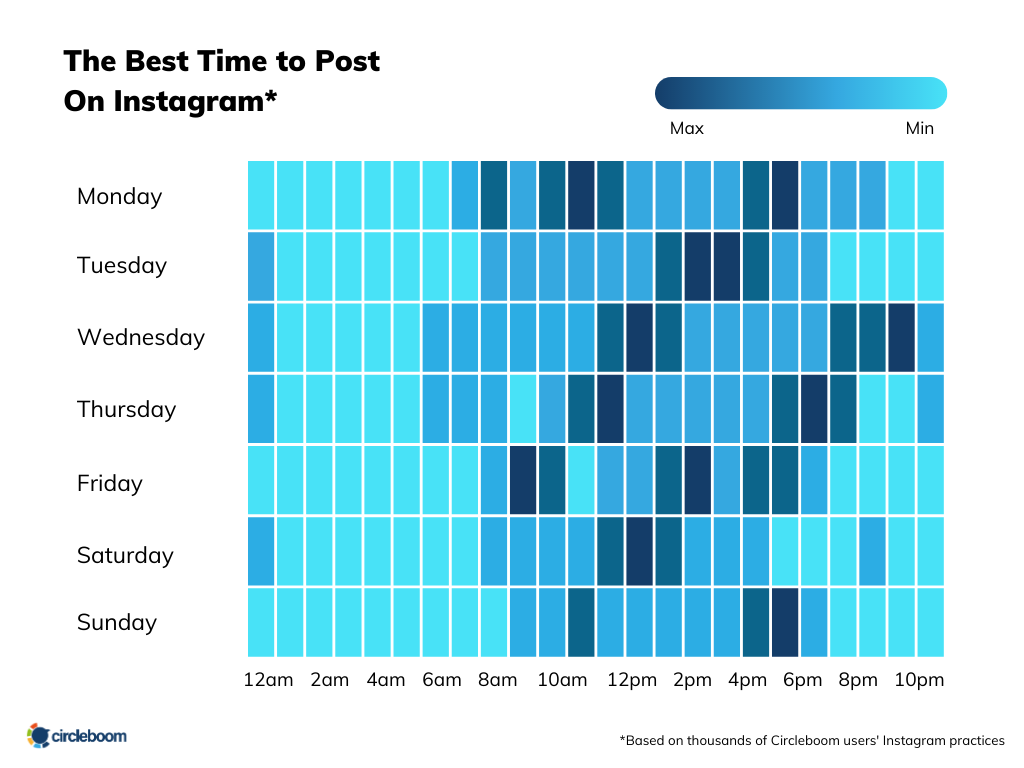 Engagement peaks by weekday — early morning and lunch-time windows remain strong alongside the new evening surge.
Monday
Monday morning starts slow as people ease into the work week. The best time to post on Instagram Monday is around 5 AM (catching early risers before the commute), 11 AM (the first real scroll break), and 7–8 PM when the workday is over. Skip the 2–4 PM window — engagement dips as people push through afternoon tasks.
Tuesday
Tuesday is one of the two highest-engagement days. The best time to post on Instagram Tuesday is 10 AM, 3 PM, and 7 PM. Audience activity stays high throughout the day, making it one of the most forgiving days for timing — almost any post between 9 AM and 8 PM performs above average.
Wednesday
Wednesday matches Tuesday for peak engagement. The best time to post on Instagram Wednesday is 11 AM, 1 PM, and 6 PM. The lunchtime window (11 AM–1 PM) is particularly strong mid-week, as users take longer scroll breaks.
Thursday
Thursday shifts earlier. Peak hours land at 8 AM, 9 AM, and then a late evening surge around 9 PM. Content that requires more attention — carousels with detailed tips, longer captions — performs well on Thursday mornings when audiences are still focused.
Friday
Friday engagement is solid but starts tapering toward the weekend. Best slots are 10 AM, 12 PM, and 8 PM. Lighter content — behind-the-scenes posts, weekend previews — tends to resonate as people mentally shift out of work mode.
Saturday
The best time to post on Instagram Saturday is a broader window: 9 AM through 3 PM. Weekend scrolling patterns are less structured, so there's no single spike. Lifestyle, travel, and food content sees above-average engagement on Saturdays.
Sunday
The best time to post on Instagram Sunday mirrors Saturday: 9 AM–3 PM with an early evening uptick. Sunday evenings (5–7 PM) can work for "week ahead" content — planning posts, motivational carousels, and Reels that set up Monday engagement.
What Is the Best Time to Post on Instagram by Region?
Peak posting times shift by several hours depending on where your audience lives. A slot that performs well for US Eastern audiences at 11 AM EST translates to 8 AM PST on the West Coast and 5 PM CET in Central Europe — which means a single post will only hit one timezone's peak window.
According to Sprout Social, US Eastern Time peak hours (11 AM–1 PM EST) shift by three hours for West Coast audiences, and global brands should schedule two to three posts per day staggered by timezone to capture each region's prime engagement window.
| Region | Timezone | Peak Hours (Local) | Best Days |
|---|---|---|---|
| US East Coast | EST / EDT | 11 AM – 1 PM | Tue – Thu |
| US West Coast | PST / PDT | 9 AM – 12 PM | Tue – Wed |
| Europe | CET / CEST | 12 PM – 2 PM | Wed – Thu |
| South/SE Asia | IST / SGT | 11 AM – 1 PM, 7–9 PM | Mon – Wed |
| Japan / Korea | JST / KST | 12 PM – 2 PM, 8–10 PM | Tue – Thu |
| Australia | AEST | 7 – 9 AM, 5 – 7 PM | Wed – Fri |
Cross-Region Posting Strategy
If your followers span multiple timezones, posting once a day at a single "best" hour leaves most of them outside the engagement window. A more effective approach: stagger two to three posts across your largest audience clusters. Scheduling tools like Later and Sprout Social allow you to queue timezone-specific posts so each region sees content during its local peak.
Don't forget DST: US clocks spring forward in March and fall back in November. Europe shifts one week later. Update your scheduling tools after each change to avoid missing your peak window by a full hour.
Regional timing data is a starting point. Combine it with your own Instagram Insights audience-location breakdown, and you will know exactly which timezone clusters to prioritize.
What Is the Best Time to Post Reels on Instagram?
Reels perform best when posted on weekdays between 12 PM and 9 PM local time, with the strongest engagement window falling after 6 PM. According to HopperHQ's 2026 analysis, Reels engagement peaks later than traditional feed posts because the format relies on a longer algorithmic distribution cycle.
Unlike standard feed posts that are evaluated in the first 30–60 minutes, Reels get a 24–48 hour discovery window. The algorithm continues testing your Reel with new audiences across the Explore page and Reels tab well after the initial post. This means the first-hour engagement still matters for momentum, but a Reel posted at 6 PM can keep gaining reach and impressions through the following day.
The shift toward evening performance makes sense when you consider user behavior. People scroll through Reels during downtime — after work, during dinner, and before bed. Morning Reels can work, but they compete with feed posts and Stories that dominate the commute window.
| Day | Best Reels Times | Peak Window |
|---|---|---|
| Monday | 12 PM, 7 PM | 6–9 PM |
| Tuesday | 12 PM, 6 PM | 5–8 PM |
| Wednesday | 1 PM, 6 PM | 6–9 PM |
| Thursday | 12 PM, 7 PM | 6–9 PM |
| Friday | 12 PM, 8 PM | 7–9 PM |
| Saturday | 9 AM, 11 AM | 9 AM–12 PM |
| Sunday | 10 AM, 12 PM | 9 AM–12 PM |
Weekends follow a different pattern. Saturday and Sunday Reels perform best between 9 AM and 12 PM, when users have leisure time to browse content they might skip on a busy weekday. If you are focused on creating high-quality Instagram videos, pairing strong production with these timing windows gives your Reels the best shot at reaching the Explore page.
Reels vs. Feed Posts: Reels peak 2–3 hours later than carousel posts and single images. If your content calendar includes both formats, schedule feed posts for late morning and Reels for early evening.
 Reels engagement peaks slightly later than feed posts — after 6 PM local time.
When Is It Best NOT to Post on Instagram?
The worst time to post on Instagram is between 1 AM and 4 AM local time, when most of your audience is asleep and early engagement signals are nearly impossible to generate. According to WordStream, posts published during these dead hours see 50–70% lower reach compared to peak-hour content.
When you publish during low-activity windows, the algorithm registers weak initial engagement — fewer likes, comments, and shares in the critical first 30–60 minutes. That signals low interest, and Instagram limits the post's distribution to Explore, hashtag results, and follower feeds alike.
Here are the time slots to avoid:
| Time Slot | Why It Hurts |
|---|---|
| 1 AM – 4 AM (local) | Near-zero audience activity; algorithm sees no engagement signals |
| Sunday 9 PM – midnight | Weekend wind-down; users are preparing for Monday, not scrolling |
| Major holiday afternoons | Audience is offline — traveling, celebrating, or away from devices |
Avoid posting during dead hours. Even strong content struggles when there's no audience online to interact with it in the first hour. The algorithm interprets silence as irrelevance.
One notable exception: the early morning window between 5 AM and 6 AM actually works for some accounts. Competition is low, and early risers who do engage send strong signals to the algorithm before the morning rush. If your Insights show a spike of follower activity at dawn, it is worth testing this contrarian slot.
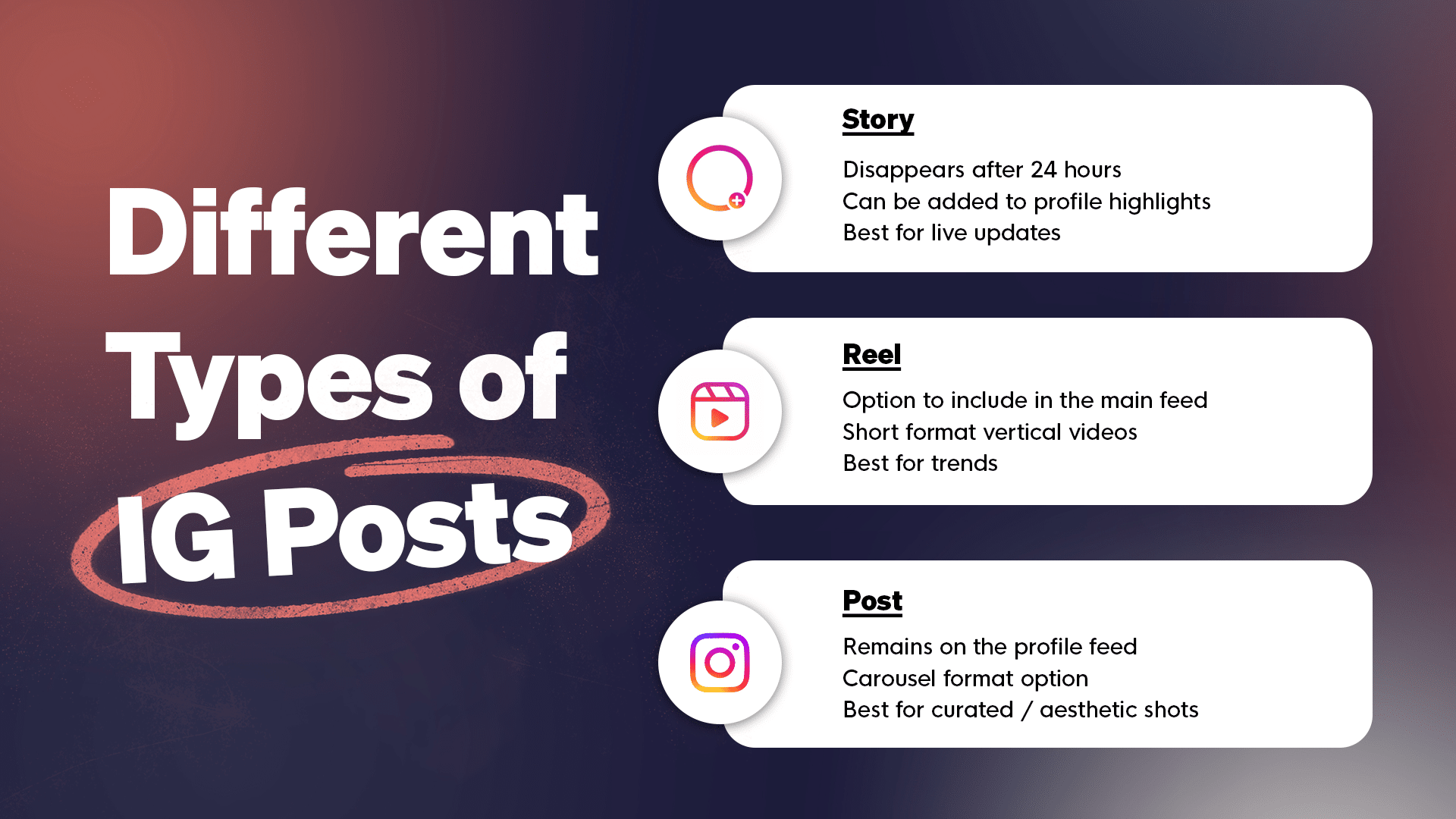 Small posting errors can drastically lower reach — fix them early.
When Is the Best Time to Post Instagram Stories?
The best time to post Instagram Stories is during three daily windows: 7–9 AM, 12–1 PM, and 7–10 PM local time. According to Influencer Marketing Hub's global posting data, Stories posted between 7–9 AM see 20–30% higher completion rates because commuters actively tap through Stories during their morning routine.
Stories operate on a 24-hour lifecycle, which makes timing strategy fundamentally different from feed posts or Reels. A Story posted at 8 AM disappears by 8 AM the next day — there is no extended algorithmic discovery window. This means you need to match each Story to the audience segment most likely to see it within that narrow timeframe.
Posting multiple Stories throughout the day consistently outperforms batching them all at once. Spreading 3–5 Stories across morning, midday, and evening keeps your profile icon active at the top of followers' feeds and signals the algorithm that your account is consistently creating content.
- Post your first Story between 7–9 AM to catch the morning commute
- Add a mid-day Story at 12–1 PM for lunch-break browsing
- Save your most engaging Story content for the 7–10 PM evening window
- Space Stories at least 2–3 hours apart for maximum visibility
Stories also send indirect signals to the algorithm about your overall account health. Accounts with high Story engagement tend to see a lift in feed post and Reel reach, because the algorithm recognizes consistent audience activity. Treating Stories as a standalone channel misses this cross-format benefit.
Your 2026 Instagram Posting Cheat Sheet
This quick-reference cheat sheet consolidates every timing recommendation from the sections above. Bookmark it, screenshot it, or pin it next to your content calendar — consistency across 3–5 posts per week outperforms random daily posting for long-term algorithmic favor, according to multiple industry studies.
All times are in your local timezone. Adjust for DST shifts in March and November (US) or March and October (Europe).
- Feed posts: Tuesday–Thursday at 9 AM, 11 AM–1 PM, or 7–8 PM
- Reels: Weekdays after 6 PM; weekends 9 AM–12 PM
- Stories: Morning 7–9 AM, lunch 12–1 PM, evening 7–10 PM (spread throughout the day)
- Best days overall: Tuesday, Wednesday, Thursday
- Worst times: 1 AM–4 AM, Sunday late evening, major holiday afternoons
- Posting frequency: 3–5 times per week on a consistent schedule
- Head start rule: Post 15–30 minutes before your peak window
- Always verify: Check Instagram Insights → Most Active Times for your specific audience
Save this cheat sheet. Print it, bookmark it, or add it to your social media planning tool. The best posting schedule is the one you actually follow week after week.