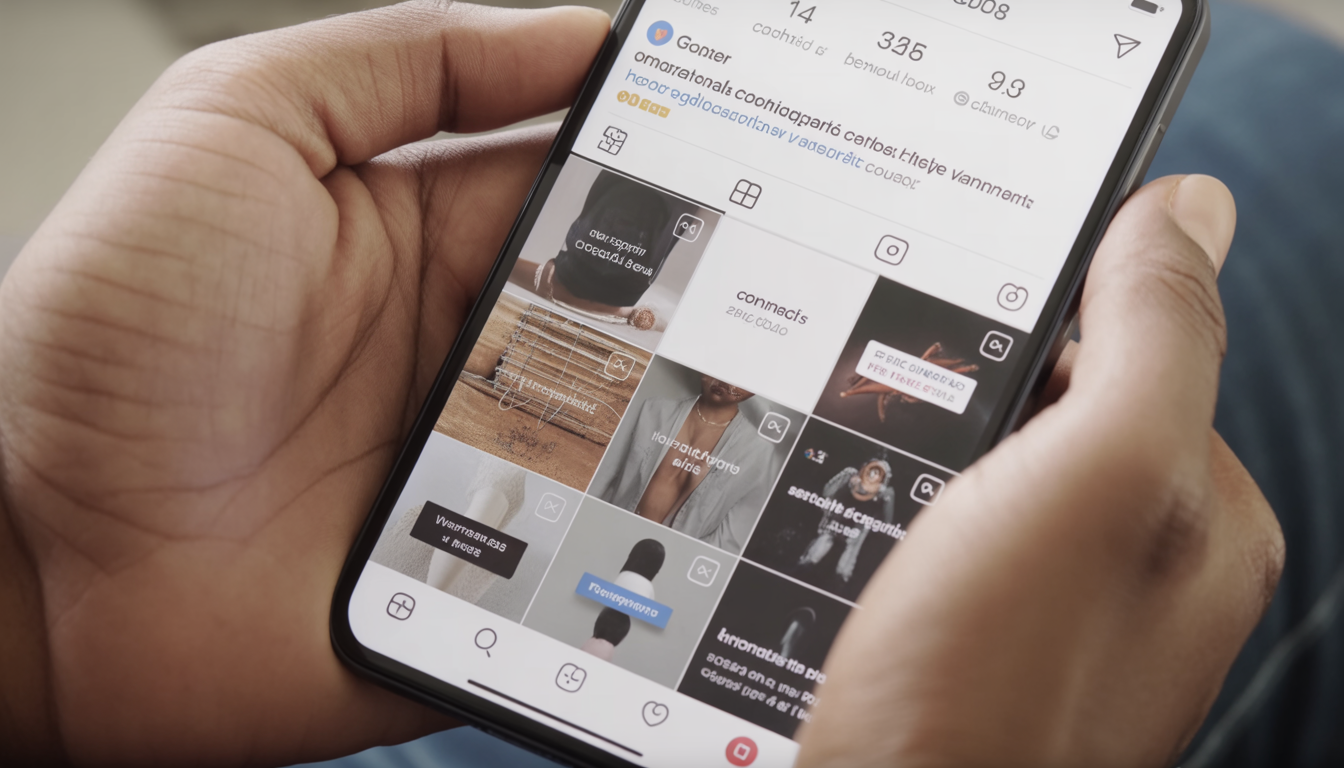
- How a “Dead” Instagram Profile Actually Looks Like
- Why Is Your Instagram Engagement So Low?
- It’s a Perception Problem, Not an Algorithm Problem
- Why Organic-Only Growth Is Too Slow in 2025
- How to Fix a Dead-Looking Instagram Profile
- What Happens When Your Profile Looks Alive Again
- If your profile feels stuck, fixing your Instagram engagement is often the first practical step
- About This Analysis
- Frequently Asked Questions
How a “Dead” Instagram Profile Actually Looks Like #
There’s a specific kind of frustration that appears long before most people start questioning algorithms or strategy. It shows up quietly, through repetition. You post something you genuinely believe is good content. You give it time. You come back later to check the response — and there’s almost nothing to react to. Not a dramatic failure, not a clear signal that something is “wrong”, just an ongoing absence of visible interest.
Many creators describe this state as a dead Instagram account — not because nothing is being posted, but because engagement never seems to move.
Nothing is obviously broken. And that’s exactly what makes this situation so difficult to diagnose.
This is usually the point where creators, small brands, and new accounts begin to feel that their Instagram profile looks dead. Not inactive in the technical sense — posts are going out, stories are being published — but inactive in the way that actually matters: how the profile looks to someone seeing it for the first time.
The account doesn’t feel alive. It doesn’t look like a place where people are interacting, responding, or paying attention. And over time, that quiet starts to feel heavier than any obvious mistake.
No Likes, No Comments, No Momentum #
A typical example of a dead-looking Instagram post: content is published, but visible engagement never builds.One of the first things people notice is how consistently underwhelming the response becomes. A post goes live, a handful of likes appear early on, and then everything stops. Comments are rare, and when they do appear, they’re usually limited to the same few people. This pattern tends to repeat across smaller or inactive accounts, regardless of how regularly they post or how much effort goes into each update.
That’s why searches like instagram no likes or instagram no comments exist in the first place. They’re not driven by panic or impatience. They usually come after people have seen the same outcome play out post after post, with no clear explanation for why engagement never seems to build.
No momentum means no signal.
And no signal means no second chance.
Over time, that lack of momentum becomes more discouraging than low numbers themselves, because it quietly suggests that nothing ever changes — no matter how consistent the effort is.
Your Account Looks Inactive (Even If You Post Regularly) #
From the inside, the account feels active. You know how often you post. You know the effort involved.
But Instagram isn’t experienced from the inside — it’s experienced from the outside. And the outside perspective is shaped almost entirely by visible interaction.
When engagement stays low, the profile begins to send an unintended signal. It doesn’t look like something that’s growing. It doesn’t look like something people are paying attention to. To a new visitor, it can easily resemble an account that’s stalled or abandoned, even when that’s not true at all.
This is where the thought instagram account not growing usually appears — not because the creator has stopped trying, but because growth is something people expect to see reflected in activity.
In practice, this is why many creators choose to normalize visible Instagram engagement signals early, so the profile stops looking inactive while organic momentum catches up.
People See the Numbers Before They See the Content #

Most Instagram users don’t arrive at a profile ready to evaluate content thoughtfully. They make fast judgments. Almost instantly, they notice how recent posts are performing, whether there are visible likes and comments, and whether there’s any sign of ongoing interaction.
- they see the numbers
- they sense the silence
- they decide whether to engage
All of this happens before captions are read, before visuals are fully processed, and long before someone decides whether your content is “good” or “bad”.
When engagement is low, the profile creates friction. It doesn’t invite interaction. It doesn’t signal social validation. In many cases, people don’t consciously reject the content — they simply don’t feel compelled to engage with it. The decision to scroll past is made quietly, without much thought, and that decision is driven by perception rather than quality.
Low Engagement Creates a Self-Reinforcing Loop #

Over time, low engagement stops being a symptom and starts functioning like a system. This shift becomes obvious when you look at accounts over months rather than individual posts. The same pattern repeats: people hesitate to interact, engagement weakens, and the profile begins to look quieter than it actually is. That appearance influences the next visitor, reinforcing the same hesitation again and again.
This is how instagram low engagement turns into a persistent state instead of a temporary dip. Posting more often doesn’t automatically change the outcome. Improving content doesn’t guarantee a different response. By the time creators start adjusting tactics, the perception layer is usually already formed — and once expectations are set, they tend to stay remarkably stable.
The profile keeps sending the same signal.
People keep responding in the same way.
Once this loop is established, it rarely breaks on its own. Not because effort is missing, but because repeated exposure keeps reinforcing the same first impression, long after it has stopped reflecting reality.
From the inside, the account feels active. You know how often you post. You know the effort involved. But Instagram isn’t experienced from the inside — it’s experienced from the outside, and the outside perspective is shaped almost entirely by visible interaction.
When engagement stays low, the profile begins to send an unintended signal. It doesn’t look like something that’s growing. It doesn’t look like something people are paying attention to. To a new visitor, it can easily resemble an account that’s stalled or abandoned, even when that’s not true at all.
This is where the thought instagram account not growing usually appears.
Not because the creator has stopped trying — but because growth is something people expect to see reflected in activity.
People See the Numbers Before They See the Content #
Most Instagram users don’t arrive at a profile ready to evaluate content thoughtfully. They make fast judgments. Almost instantly, they notice how recent posts are performing, whether there are visible likes and comments, and whether there’s any sign of ongoing interaction.
That appearance influences the next visitor, reinforcing the same hesitation again and again.
This is how instagram low engagement turns into a persistent state instead of a temporary dip. Posting more often doesn’t automatically change the outcome. Improving content doesn’t guarantee a different response. By the time creators start adjusting tactics, the perception layer is usually already formed — and once expectations are set, they tend to stay remarkably stable.
The profile keeps sending the same signal.
People keep responding in the same way.
Once this loop is established, it rarely breaks on its own. Not because effort is missing, but because repeated exposure keeps reinforcing the same first impression, long after it has stopped reflecting reality.
How Perception Overrides Reality #
| From the creator’s side | From the visitor’s side |
|---|---|
| Posting consistently | Looks inactive |
| Good content quality | Low social proof |
| Effort over time | No visible momentum |
| Waiting for organic growth | Quick decision to scroll past |
This mismatch explains why many accounts feel stuck. What the creator knows to be true about their effort is not what the visitor sees — and perception always wins that comparison.
It’s a Perception Problem, Not an Algorithm Problem #
By the time most people start blaming algorithms, the real decision has already been made — just not by Instagram.
It’s made by other users.
Long before reach drops or impressions flatten, people form an opinion about an account based on how it looks at a glance. Not visually, but socially. Does this profile feel active? Does it look like people are interacting here? Does engaging with this account feel normal?
Those questions are answered in seconds, often without conscious thought.
Because these judgments happen almost instantly, visible engagement acts as a shortcut for trust. When likes, comments, and followers look consistent, people feel more comfortable interacting — even before they consciously evaluate the content itself.
This is why many creators choose to normalize visible Instagram signals early, rather than waiting for organic perception to shift on its own.
People Decide Whether to Engage Almost Instantly #
When someone lands on a profile, they don’t approach it as a blank slate. They scan for signals. Recent activity. Visible reactions. Signs that interaction is already happening.
- They notice how many likes recent posts have
- They check whether anyone is commenting
- They sense whether the account feels active or quiet
That quick scan sets expectations. If the profile looks alive, engagement feels natural. If it looks inactive, engagement feels risky — or simply unnecessary.
This decision happens before content quality has any real chance to matter.
Why Organic-Only Growth Is Too Slow in 2025 #
At this stage, many people reach a quiet but uncomfortable conclusion: even if they keep doing everything “right”, the results aren’t catching up. Posting consistently. Improving content. Staying active. None of it seems to change how the account is perceived in the short term.
The answer isn’t that organic growth doesn’t work. It’s that it works on a timeline that no longer matches how attention is distributed.
| Organic growth logic | What actually happens |
|---|---|
| Consistency builds trust over time | Profile looks inactive during that time |
| Content improves gradually | First impressions happen instantly |
| Audience warms up slowly | Visitors decide in seconds |
| Engagement compounds later | Opportunities are lost early |
How to Fix a Dead-Looking Instagram Profile #
Long before reach drops or impressions flatten, people form an opinion about an account based on how it looks at a glance. Not visually, but socially. Does this profile feel active? Does it look like people are interacting here? Does engaging with this account feel normal?
Those questions are answered in seconds, often without conscious thought.
Because these judgments happen almost instantly, visible engagement acts as a shortcut for trust. When likes, comments, and followers look consistent, people feel more comfortable interacting — even before they consciously evaluate the content itself. This is why many creators choose to normalize visible Instagram signals early, rather than waiting for organic perception to shift on its own.
People Decide Whether to Engage Almost Instantly #
When someone lands on a profile, they don’t approach it as a blank slate. They scan for signals. Recent activity. Visible reactions. Signs that interaction is already happening.
What Happens When Your Profile Looks Alive Again #
The most noticeable change doesn’t happen in analytics. It happens in how people behave.
When a profile looks active, interaction stops feeling awkward. New visitors hesitate less. They scroll deeper. They pause. They’re more willing to like a post or leave a comment because it feels normal to do so.
Posts no longer feel ignored by default. Engagement starts to appear more naturally. Content gets evaluated on its actual value instead of being filtered out at first glance.
If Your Profile Feels Stuck, Fixing Engagement Is the First Practical Step #
Low engagement wasn’t a verdict on quality. It was a signal issue. A first-impression problem that prevented your posts from getting a fair chance.
Fix the layer people see first. Let your content do the rest.
Once that baseline is in place, content can finally do what it’s supposed to do: attract attention, start conversations, and grow organically.
Frequently Asked Questions #
Why does my Instagram profile look inactive even if I post regularly?
Because activity is judged by visible interaction, not by posting frequency. From the outside, a profile is evaluated based on likes, comments, and signs of ongoing engagement.
Can good content fail because of low engagement?
Yes. Content quality is often never evaluated if engagement signals are missing. Perception filters content before people decide whether to interact.
Is low Instagram engagement always an algorithm issue?
In most cases, no. Algorithms amplify existing user behavior rather than creating the problem themselves.
This article is based on analysis of Instagram engagement patterns, visible social proof signals, and user behavior across inactive, early-stage, and underperforming accounts. The focus is on how perception — not content quality alone — influences engagement and growth outcomes.