- What Is the 5-3-1 Rule on Instagram?
- Instagram Algorithm Update 2026: How Timing Connects to Ranking
- Best Days and Times to Post on Instagram in 2026 (Data Table)
- Best Time to Post on Instagram by Niche and Industry
- Common Mistakes When Choosing the Best Time to Post
- Final Thoughts
- Day-by-Day Breakdown: Monday Through Sunday
- FAQ: Best Time to Post on Instagram in 2026
- How to Find Your Own Best Time to Post on Instagram
- Recommended Instagram Posting Schedules for 2026
- Best Time to Post Instagram Reels and Stories in 2026
- Quick Cheat Sheet: Best Time to Post by Region
- Why Posting Time Still Matters in 2026
- Worst Times to Post on Instagram in 2026
What Is the 5-3-1 Rule on Instagram?
The 5-3-1 rule is a content strategy framework that structures your Instagram posting schedule around a balanced ratio: for every 9 posts, publish 5 value-driven or educational posts, 3 personality or behind-the-scenes posts, and 1 promotional or sales-focused post.
This ratio keeps your feed audience-centric rather than sales-heavy. Educational posts build authority, behind-the-scenes content builds connection, and the occasional promotional post converts without causing follower fatigue.
The 5-3-1 Formula: 5 value posts (tips, tutorials, data) + 3 personality posts (BTS, stories, team features) + 1 promotional post (product, service, offer). Apply this ratio across every 9-post cycle to maintain audience trust while still driving business goals.
How the 5-3-1 Rule Connects to Timing
The rule becomes more powerful when combined with strategic posting times. Value and educational content — the 5 in the ratio — performs best during peak engagement windows (midweek, 11 AM – 1 PM or 6 – 8 PM) because these posts rely on saves, shares, and comments to reach beyond your existing followers.
Personality and behind-the-scenes content — the 3 — works well during moderate-traffic windows like Saturday morning or Sunday afternoon, when audiences browse more casually and are receptive to informal content.
Promotional posts — the 1 — can be strategically placed in lower-competition windows (early morning or late afternoon) where they still reach your core followers without needing to compete for broad algorithmic distribution. Since promotional content targets people already familiar with your brand, it does not need the same engagement velocity as value-driven posts.
By mapping each content type to its optimal posting window, you align your content strategy with the Instagram algorithm's behavior — giving each post the best chance to fulfill its specific purpose.
Instagram Algorithm Update 2026: How Timing Connects to Ranking
Instagram no longer runs a single algorithm. In 2026, the platform operates distinct ranking systems for Feed, Reels, Stories, and Explore — each weighing engagement signals differently. Understanding how timing interacts with each system is essential for maximizing reach across all formats.
Format-Specific Ranking Signals
According to Later, the Instagram algorithm evaluates content through format-specific lenses:
- Reels: Completion rate and average watch time are the dominant signals. A Reel that holds viewers to the end gets dramatically more distribution. Posting when your audience has time to watch fully — evening hours and weekends — improves this metric.
- Feed posts: Comments and saves carry the most weight. The algorithm interprets saves as a strong quality signal, making mid-day and late afternoon windows (when users browse more intentionally) ideal for carousel and educational content.
- Stories: Taps forward, replies, and sticker interactions determine reach. Stories posted during active browsing sessions (lunch and evening) generate more interaction than those published during low-activity periods.
- Explore: This surface draws from all formats and prioritizes content with high engagement velocity from non-followers. Strong early signals from any format can push content to Explore.
Key Insight: "Sends per reach" — how often users share your post via DMs relative to impressions — is now Instagram's top ranking signal, as confirmed by Adam Mosseri. Content that lands when followers are actively chatting on the platform earns the highest send rates.
The Micro-Window Tactic
Most creators post on the hour or half-hour — 9:00 AM, 12:00 PM, 6:30 PM. This creates competition spikes at predictable times. Data suggests that posting at slightly off-peak moments (8:30 AM, 4:45 PM, or 6:15 PM instead of the round hour) can increase initial exposure by 10 to 15%. The feed has fewer fresh posts competing for the same attention, giving your content a brief algorithmic advantage.
This "micro-window" tactic is particularly effective for smaller accounts that cannot rely on large follower bases to generate instant engagement. By avoiding the most saturated moments, you extend the time your post sits near the top of followers' feeds before newer content pushes it down.
Upload Quality and Algorithmic Perception
Timing is not the only technical factor affecting distribution. Instagram's algorithm also evaluates upload quality — resolution, aspect ratio, and encoding. Posts uploaded at the correct resolution (1080 x 1920 for Reels, 1080 x 1350 for Feed) under a stable connection perform measurably better in reach tests. A perfectly timed post with poor compression or incorrect dimensions will still underperform.
The combination of precise timing, correct format specifications, and strong initial engagement is what consistently separates high-reach content from posts that stall after a few hundred impressions.
Best Days and Times to Post on Instagram in 2026 (Data Table)
The consensus across multiple analytics platforms points to Wednesday between 11 AM and 1 PM and weekday evenings from 6 to 8 PM as the strongest global posting windows in 2026. But the full picture is more nuanced — each day of the week carries its own engagement pattern shaped by user behavior, competition density, and content saturation.
The table below aggregates findings from Buffer (9.6 million posts), Hootsuite, Later, and Sprout Social. All times are in local timezone.
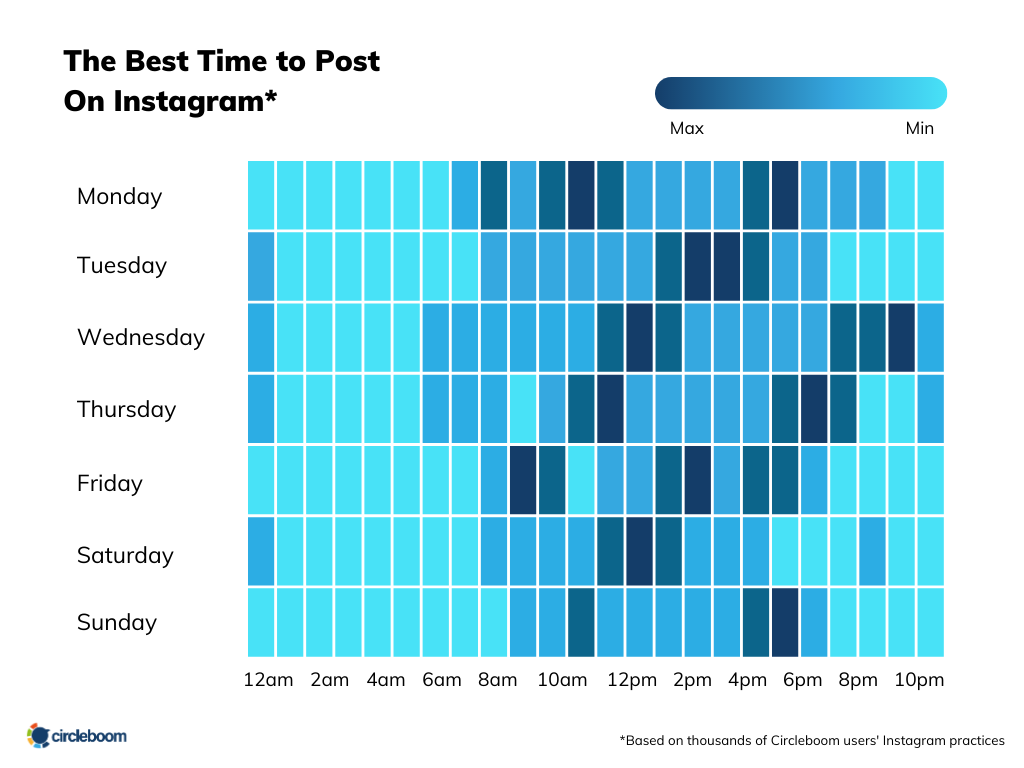
| Day | Peak Times (Local) | Engagement Trend | Notes |
|---|---|---|---|
| Monday | 10 AM – 12 PM, 6 – 8 PM | Strong | Week-start energy; motivational Reels and brand updates perform well |
| Tuesday | 5 – 8 AM, 3 – 7 PM | Very High | One of the top engagement days; ideal for product launches |
| Wednesday | 11 AM – 1 PM, 6 – 8 PM | Highest | Consensus best day across all major studies |
| Thursday | 4 – 5 AM, 12 – 1 PM | Very High | Early risers check feeds; midday carousel posts thrive |
| Friday | 11 AM – 2 PM | High | Pre-weekend energy boosts short Reels and lifestyle content |
| Saturday | 10 AM – 1 PM | Moderate | Casual scrolling; behind-the-scenes and community content |
| Sunday | 12 – 3 PM, 5 – 7 PM | Balanced | Emotional storytelling and planning posts gain traction |
The Evening Hours Shift
The most significant change in 2026 data is the rise of evening posting windows. Buffer's analysis of 9.6 million posts shows that content published between 6 and 11 PM now outperforms mid-day posts for the first time in the platform's history. The pattern is driven by shifting user behavior: more people scroll Instagram after work and during dinner hours, creating a second daily peak that rivals or exceeds the traditional lunch-break window.
This does not mean mid-day posting is dead. The 11 AM to 1 PM window remains strong, particularly for educational content and B2B accounts whose audiences are active during work hours. What has changed is that creators now have two reliable daily windows instead of one — giving them more flexibility in scheduling.
The Early Morning Low-Competition Window
An emerging trend worth testing is the 5 to 8 AM slot. This window sees far fewer posts compared to mid-day, which means less competition for feed real estate. Content published early often builds engagement gradually throughout the morning, landing in feeds as users wake up and check their phones. Thursday and Tuesday mornings show the strongest results for this strategy.
The tradeoff is lower absolute volume — fewer users are online at 6 AM than at noon. But the reduced competition means your post faces less algorithmic pressure, potentially earning a higher engagement rate relative to impressions. For accounts with global audiences spanning multiple time zones, early morning in one region often coincides with peak hours in another.
Best Time to Post on Instagram by Niche and Industry
Global averages are useful, but the when to post on Instagram question has a different answer depending on your industry. Audience behavior varies drastically between a B2B software brand and a food blogger — and so do the optimal posting windows. Data aggregated by Iconosquare and Outfy reveals clear niche-specific patterns.
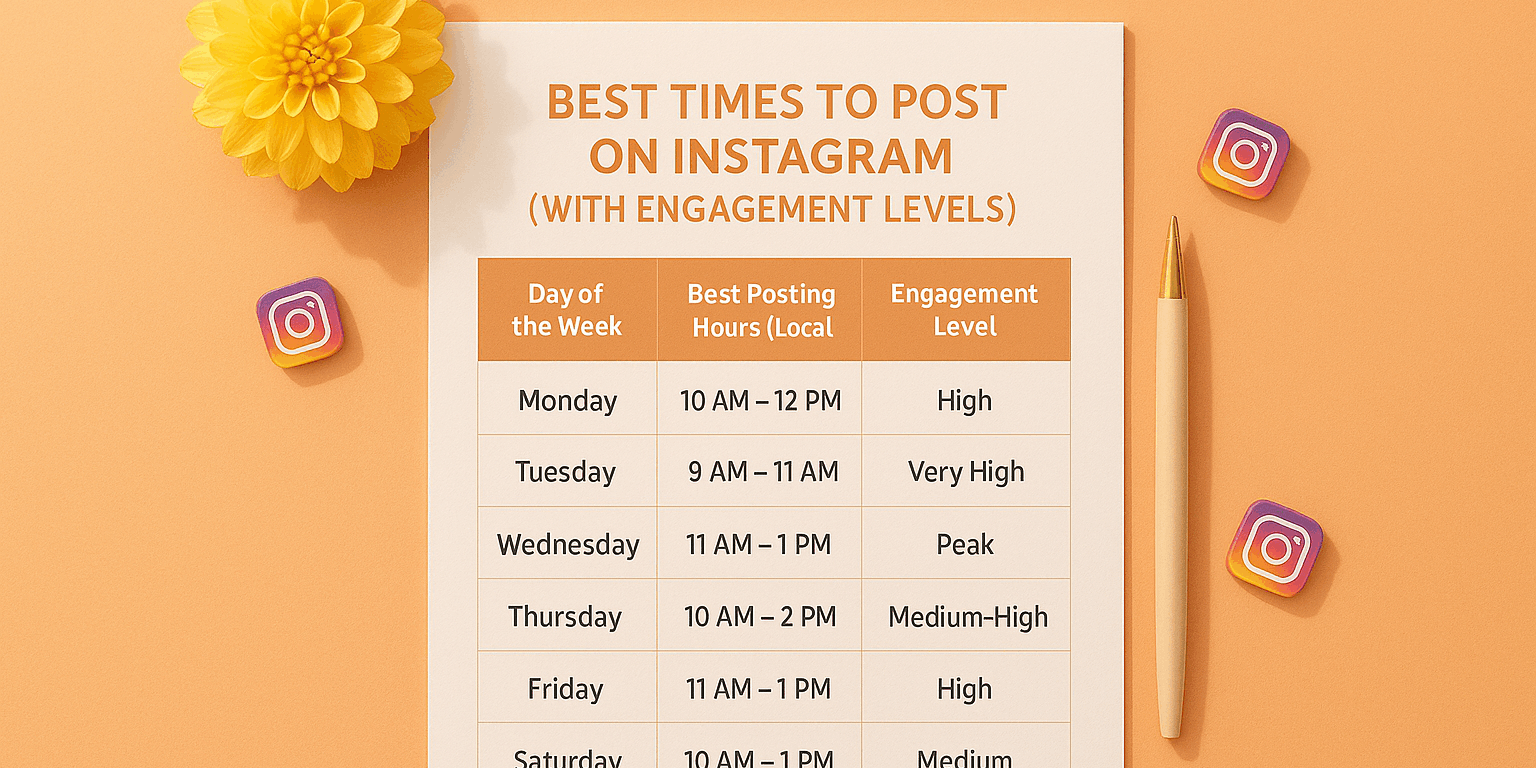
Niche-Specific Timing Table
| Niche | Best Days | Best Times | Top Format |
|---|---|---|---|
| Travel & Tourism | Wed – Fri, Sat | 10 AM – 12 PM, 7 – 9 PM | Reels, carousel |
| Fashion & Beauty | Tue – Thu | 12 – 2 PM, 6 – 8 PM | Reels, Stories |
| Food & Beverage | Fri – Sat | 10 AM – 1 PM | Reels, static images |
| Education / Online Learning | Mon – Thu | 11 AM – 3 PM | Carousel, Reels |
| Healthcare & Wellness | Mon – Tue | 10 AM – 1 PM, 4 – 6 PM | Carousel, infographics |
| Fitness | Mon, Wed, Sat | 6 – 8 AM, 5 – 7 PM | Reels, Stories |
| E-commerce / Retail | Tue – Fri | 9 – 11 AM, 5 – 7 PM | Reels, carousel |
| B2B & Professional Services | Tue – Thu | 8 – 10 AM, 3 – 5 PM | Carousel, static images |
Why Niche Timing Differs
Travel & Tourism accounts see their highest engagement on weekends and Wednesday evenings, when users daydream about upcoming trips. Saturday morning (9 – 11 AM) is particularly strong for aspirational Reels — viewers are relaxed and more receptive to destination content. Evening posts (7 – 9 PM) work well for trip-planning carousels.
Fashion & Beauty audiences peak during lunch breaks (12 – 2 PM) and early evenings (6 – 8 PM) midweek. These windows align with moments when users actively seek style inspiration and product recommendations. Reels showcasing "get ready with me" formats or product comparisons tend to outperform static content by significant margins.
Food & Beverage brands benefit from a pre-meal publishing strategy. Posting appetizing Reels between 10 AM and 1 PM on Fridays and Saturdays catches users before lunch when hunger and weekend indulgence align. Recipe carousels posted on weekday mornings also gain strong saves.
Education and Online Learning accounts thrive during "micro-learning" moments — the 11 AM to 3 PM window on weekdays when professionals and students take breaks between tasks. Tutorial carousels and explainer Reels perform best in this niche because the audience is in a receptive, information-seeking mindset.
Fitness follows a unique dual-peak pattern: early morning (6 – 8 AM) when workout-motivated users check Instagram before the gym, and late afternoon (5 – 7 PM) when they wind down post-exercise. Monday and Wednesday posts capture "fresh start" energy, while Saturday mornings attract casual fitness enthusiasts.
B2B and Professional Services audiences behave more like email users — active during business hours, especially early morning (8 – 10 AM) and mid-afternoon (3 – 5 PM) on Tuesday through Thursday. Carousel posts with data, case studies, or industry insights outperform casual content in this segment.
The core lesson: your Instagram posting schedule should match your audience's daily rhythm, not a generic best-practices list. Use Instagram Insights to validate these niche patterns against your own follower behavior.
Common Mistakes When Choosing the Best Time to Post
Even accounts that follow timing research can underperform if they fall into these common traps. Each mistake below includes a brief explanation and a practical fix — because knowing the best time to post on Instagram for likes and engagement is only half the battle.
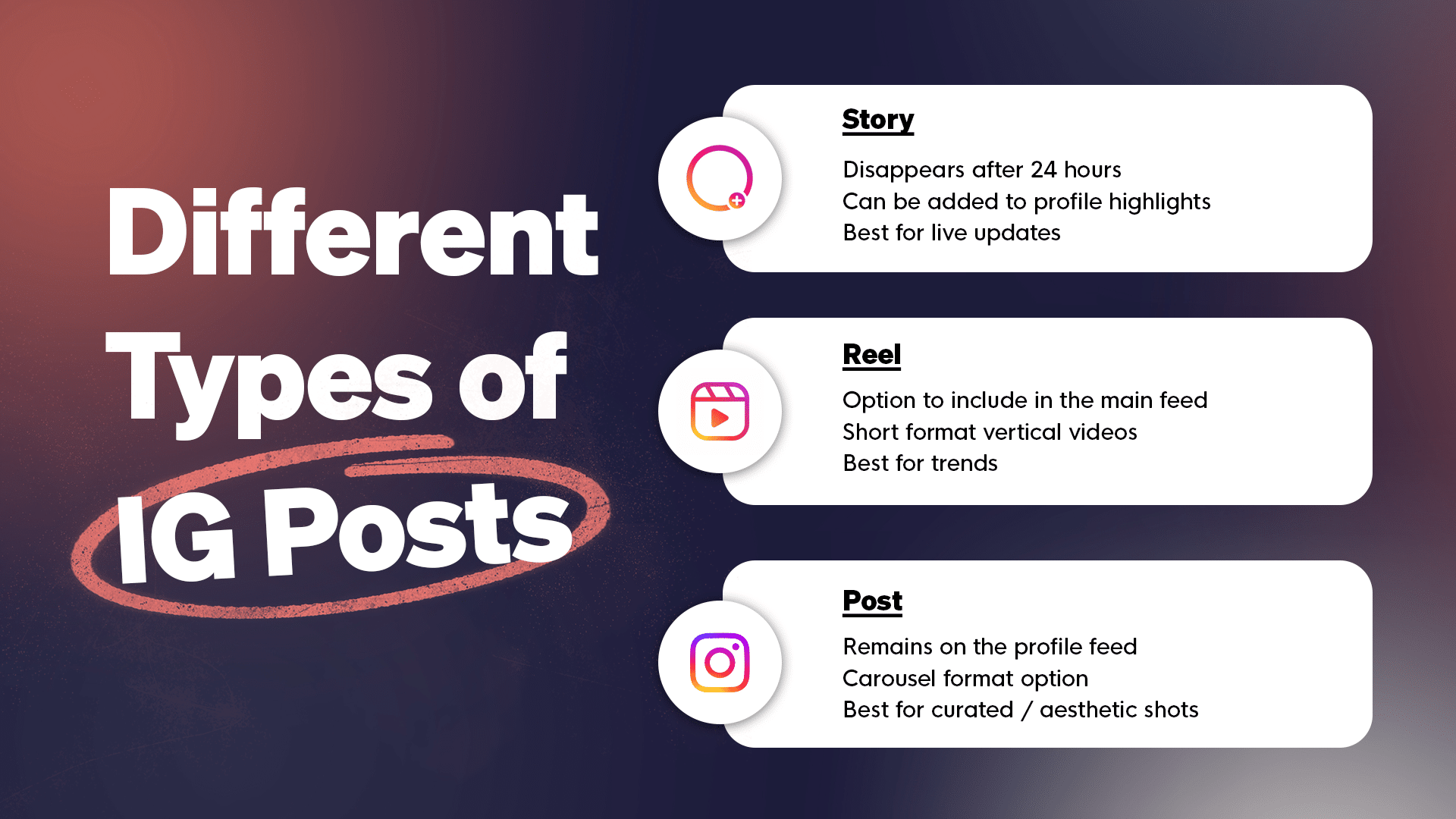
- Ignoring time zones. If your followers span multiple regions, posting based on your local time alone misses key audience segments. Check follower geography in Instagram Insights and schedule posts that overlap your two or three largest timezone clusters.
- Posting too frequently. More posts does not equal more engagement. Publishing daily (or multiple times per day) without maintaining quality leads to engagement fatigue — your audience starts scrolling past your content. Stick to 3 – 5 quality posts per week and supplement with Stories.
- Not testing variations. Relying on one study or a single "best time" indefinitely ignores that audience behavior evolves. Re-test your posting windows every quarter using a controlled approach: same content quality, different time slots, measured over at least 14 days.
- Skipping Reels-specific timing. Reels follow different visibility cycles than Feed posts. If you publish Reels during traditional Feed peak hours (late morning), you may miss the evening and weekend windows where Reels-specific engagement peaks.
- Neglecting captions and thumbnails. Timing gets your post in front of eyes, but weak captions and generic thumbnails fail to convert impressions into engagement. The algorithm evaluates early signals — if users scroll past because the cover image is uninspiring, even perfect timing cannot compensate.
- Publishing without a call to action. Every post should encourage a specific action: save, comment, share, or follow. Posts without a clear CTA consistently generate lower engagement in the first hour, which limits algorithmic distribution regardless of when they were published.
- Relying solely on generic studies. The timing data in this article (and every other guide) reflects global averages. Your audience may deviate significantly. A B2B SaaS account might peak at 8 AM on Tuesdays while a fitness creator peaks at 6 PM on Saturdays. Always cross-reference external data with your own Instagram Insights.
- Not adjusting for seasons and algorithm changes. Posting schedules that worked in Q1 may underperform in Q3. Summer browsing habits differ from winter ones, and Instagram rolls out algorithm updates multiple times per year. Build a quarterly review into your social media management workflow to keep your schedule aligned with current conditions.
Final Thoughts
The best time to post on Instagram in 2026 comes down to a few clear principles. Evening hours (6 – 8 PM) have emerged as a powerful new window, challenging years of mid-morning dominance. Wednesday remains the strongest day across every major study. And format matters — Reels, Stories, and Feed posts each follow distinct engagement curves that reward different posting times.
But global averages are a starting point, not a final answer. The accounts that grow fastest are those that use Instagram Insights to validate timing against their own audience behavior, test methodically over two-week cycles, and adjust quarterly. Consistency in your posting schedule — whatever the schedule is — carries more weight with the algorithm than chasing a perfect hour.
The data is clear: posting smarter, not more often, is what separates growing accounts from stagnant ones. Build a rhythm your audience can anticipate, match your content type to its optimal window, and treat your posting schedule as a living strategy that evolves with your followers.
References
- Instagram Business — Trends Report 2025
- Later — Best Time to Post on Instagram
- Sprout Social — Best Times to Post on Social Media
- Buffer — Instagram Posting Time Analytics
- Hootsuite — Best Time to Post on Instagram
- HopperHQ — Best Time to Post on Instagram
- Influencer Marketing Hub — Global Posting Insights
- Iconosquare — Best Time to Post and How to Find It
- Outfy — Best Times to Post on Social Media
- Later — How the Instagram Algorithm Works
Day-by-Day Breakdown: Monday Through Sunday
Global averages provide a starting point, but the best time to post on Instagram varies by day of the week. Each day carries distinct user behavior patterns driven by work routines, commute times, and leisure habits. Below is a detailed look at what the data shows for every day.
Monday
Best times: 10 AM – 12 PM, 6 – 8 PM
Monday is a recovery day. Users check Instagram during mid-morning breaks after settling into the work week. The best time to post on Instagram Monday falls in the late morning window when professionals take their first scroll break. Motivational content, week-ahead planning posts, and brand announcements resonate well. Avoid early Monday morning (before 9 AM) — engagement is typically sluggish as people prioritize email and meetings.
Evening hours (6 – 8 PM) offer a second window as users decompress after work. Short Reels and carousel posts tend to outperform static images on Monday evenings.
Tuesday
Best times: 5 – 8 AM, 3 – 7 PM
Tuesday consistently ranks among the highest-engagement days. The best time to post on Instagram Tuesday starts surprisingly early — the 5 to 8 AM window catches users during morning routines before the feed becomes saturated. The afternoon block (3 – 7 PM) is equally strong, making Tuesday ideal for product launches, promotional Reels, or anything you want maximum eyes on.
The reason Tuesday performs so well is behavioral: by the second day of the week, people have settled into their routine and browse Instagram more intentionally, spending longer per session.
Wednesday
Best times: 11 AM – 1 PM, 6 – 8 PM
Wednesday is the consensus best day to post on Instagram across nearly every major study. Midweek engagement peaks during the lunch break as users look for a mental reset. Educational carousels, tutorials, and data-driven content perform exceptionally well during the 11 AM to 1 PM window.
Pro Tip: Wednesday between 11 AM and 1 PM is the single highest-engagement window identified across Sprout Social, Buffer, and Later data. If you can only prioritize one posting slot per week, make it Wednesday midday.
The evening window (6 – 8 PM) rounds out a strong day. Brands that post twice on Wednesday — once at lunch, once in the evening — often see their best weekly performance.
Thursday
Best times: 4 – 5 AM, 12 – 1 PM
Thursday's data reveals an interesting split. The ultra-early morning slot (4 – 5 AM) works because very few accounts post at that hour, giving your content a head start in the feed before the morning rush. By the time most followers open Instagram around 7 – 8 AM, your post has already accumulated some early engagement.
The midday window (12 – 1 PM) aligns with lunch breaks. Thursday afternoons tend to be slightly weaker than Tuesday or Wednesday, so concentrating effort on the two peak slots yields the best return.
Friday
Best times: 11 AM – 2 PM
Friday engagement is driven by pre-weekend energy. Users scroll more casually and are receptive to lighter, lifestyle-oriented content. Short Reels, weekend plans, and behind-the-scenes clips perform best during the late morning to early afternoon block.
Post-3 PM engagement on Friday drops sharply as users shift to offline activities. If you schedule content for Friday, front-load it before 2 PM.
Saturday
Best times: 10 AM – 1 PM
Saturday is the lowest-engagement day on Instagram for most accounts. The best time to post on Instagram Saturday falls in the late morning window when users browse casually over coffee or brunch. Community-focused content, user-generated features, and relaxed behind-the-scenes posts tend to work better than polished brand campaigns.
Avoid posting important launches or high-priority content on Saturday — save those for midweek when feed competition delivers stronger algorithmic signals. If you do post, keep it authentic and informal.
Sunday
Best times: 12 – 3 PM, 5 – 7 PM
Sunday follows a two-window pattern. The afternoon slot (12 – 3 PM) captures post-lunch browsing, while the evening window (5 – 7 PM) taps into what some analysts call the "Sunday Scaries" effect — users scrolling through Instagram as they mentally prepare for the upcoming week. This emotional state makes Sunday evening surprisingly effective for storytelling, reflection content, and planning-oriented posts.
The best time to post on Instagram Sunday for engagement leans toward the 5 – 7 PM window, especially for accounts in the lifestyle, wellness, and personal development niches.
FAQ: Best Time to Post on Instagram in 2026
Yes — posting time remains a significant ranking signal even with Instagram's increasingly personalized algorithm. The platform prioritizes fresh content within active audience windows, and accounts that post when followers are online receive 20 – 30% higher initial reach. This early momentum compounds: stronger first-hour engagement leads to broader distribution through Explore and Reels recommendations. Timing alone will not save weak content, but it consistently amplifies strong content.
Wednesday is the consensus best day to post on Instagram across Sprout Social, Buffer, Later, and Hootsuite data. The 11 AM – 1 PM window on Wednesday consistently delivers the highest engagement rates globally. Tuesday and Thursday are close seconds, making the midweek stretch (Tuesday through Thursday) the strongest three-day posting block for most accounts.
Reels perform best between 12 – 2 PM and after 6 PM on weekdays. The evening window is particularly strong because users have longer viewing sessions after work, which improves completion rate — a key Reels ranking signal. Saturday mornings (9 – 11 AM) also work well for lifestyle and entertainment Reels. Unlike Feed posts, Reels have a longer discovery window and can gain traction hours after publishing through the Reels tab.
The global peak posting hours fall between 10 AM and 1 PM (local time) during weekdays, with a second peak from 6 to 8 PM. These windows reflect lunch-break scrolling and post-work browsing patterns. However, "peak hours" also mean peak competition — some accounts find better results posting 15 – 30 minutes before these windows to avoid the content flood.
Re-evaluate your posting schedule every three months. Audience behavior shifts with seasons, platform updates, and broader cultural patterns. Brands that review and adjust their timing quarterly see approximately 15% better engagement consistency compared to those using a fixed schedule year-round. Use Instagram Insights data from the most recent 30 days as the basis for each quarterly review.
Schedule two separate posting slots — one for your primary market and one for your secondary region. A proven strategy is posting at 9 AM EST (3 PM CET) and 6 PM CET (12 PM EST) to cover North American and European peaks simultaneously. Use Meta Business Suite or a scheduling tool like Later to automate this dual-timezone approach and maintain consistent delivery without manual effort.
Neither is universally better — it depends on your audience and content type. Early morning posts (5 – 8 AM) face less competition and can build engagement gradually, making them effective for accounts with global audiences or for educational content that benefits from slow-burn distribution. Evening posts (6 – 9 PM) reach larger active audiences and generate faster engagement velocity, making them better for Reels and time-sensitive content. Test both windows over two weeks and compare engagement-to-reach ratios.
Track three key metrics in Instagram Insights over a 14-day testing period: reach, engagement rate (engagements divided by reach), and saves per post. If all three improve compared to your previous schedule, the new timing is working. For more granular analysis, use Meta Business Suite or third-party tools like Metricool or Iconosquare, which can benchmark your performance against historical data and suggest further optimization.
How to Find Your Own Best Time to Post on Instagram
Generic timing guides provide a solid starting point, but the most reliable best time to post on Instagram is the one derived from your own audience data. Instagram Insights gives you direct access to when your followers are most active — no third-party tool required.
Follow this step-by-step process to identify and validate your personal optimal posting window.
- Switch to a Business or Creator account to unlock Instagram Insights
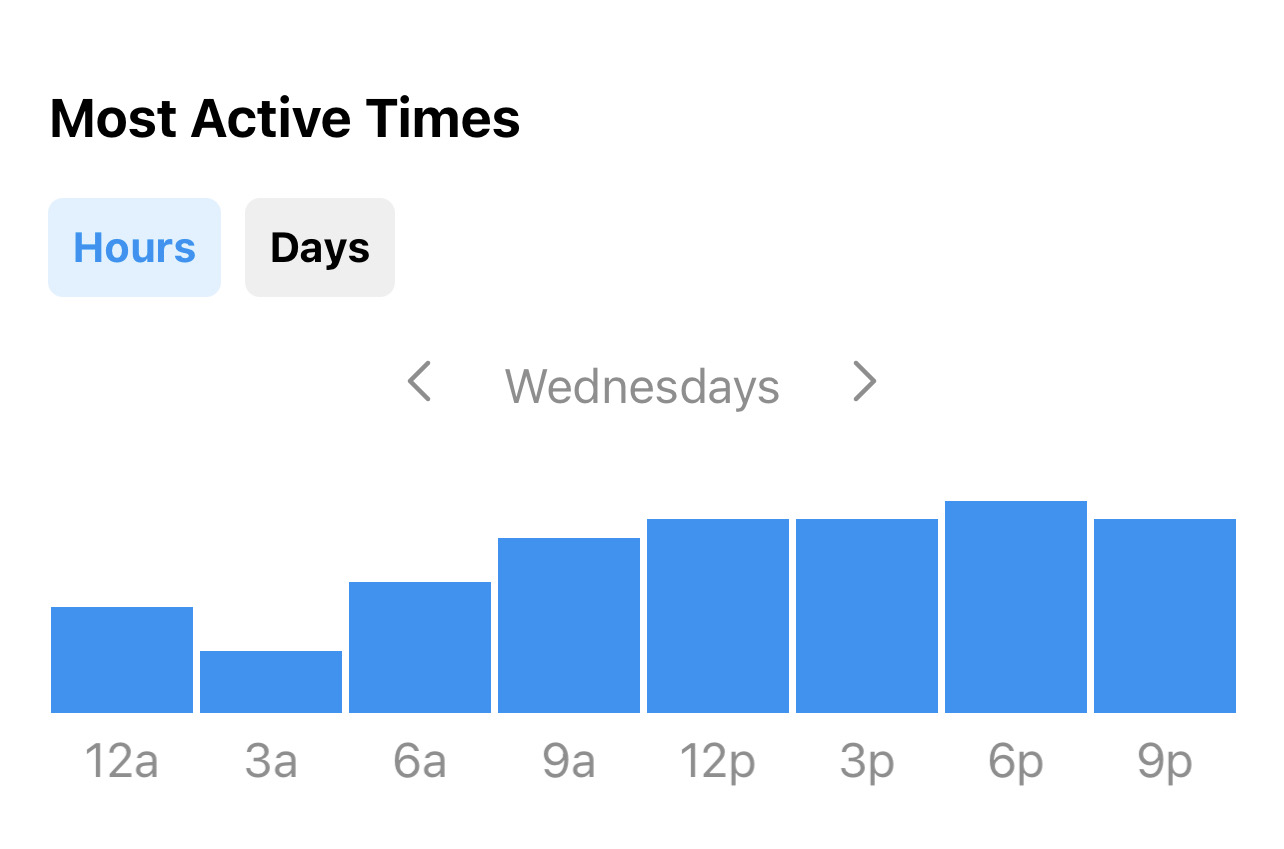
- Open Audience > Followers > Most Active Times and note the top days and hour blocks
- Track performance of your last 20 posts: record day, time, format, reach, saves, and comments
- Find overlaps between high-performance posts and follower activity windows
- Test 2 – 3 different time slots over a 14-day period while keeping content quality consistent
- Analyze results after 14 days and select the slot with the best engagement-to-reach ratio
- Adjust your schedule quarterly as audience behavior evolves with seasons and algorithm updates
Reading Your Insights Data
Inside Instagram Insights, the "Most Active Times" chart shows follower activity by hour and day. Look for clusters — not isolated spikes. A consistent block where 60%+ of your followers are online is more valuable than a single peak hour surrounded by low activity. Cross-reference this with your post performance data to find where high follower activity and high engagement overlap.
Pay special attention to the engagement-to-reach ratio rather than raw likes. A post with 500 reach and 50 engagements (10% rate) performed better algorithmically than one with 2,000 reach and 60 engagements (3% rate). This ratio tells you whether the timing helped your content connect with the right segment of your audience.
The 15-Minute Head Start
A tactic used by experienced creators: publish your content 15 minutes before the peak activity window identified in your Insights. This ensures your post is already in followers' feeds as they log in, maximizing the chance of immediate interaction during the engagement velocity zone. Instead of competing with a flood of posts arriving at the exact peak minute, you get a head start.
Tools That Help
Beyond Instagram's native Insights, several platforms offer deeper scheduling and analysis:
- Meta Business Suite — free, directly integrated with Instagram and Facebook. Offers scheduled publishing, audience activity heatmaps, and performance comparisons.
- Metricool — provides timezone-aware best-time recommendations based on historical post data. Useful for accounts managing audiences across multiple regions.
- Iconosquare — advanced analytics including engagement rate benchmarks by time slot, content type comparisons, and competitor timing analysis.
These tools add value when you manage multiple accounts or need to track performance across different content formats. For a single account, Instagram Insights combined with a simple spreadsheet gives you everything needed to find your optimal posting rhythm.
The key is consistency: test a schedule for at least two weeks before drawing conclusions, and revisit your data every quarter. Audience demographics shift, algorithm updates roll out, and seasonal patterns change — your posting schedule should evolve alongside them.
The best time to post on Instagram in 2026 is no longer the mid-morning slot that dominated advice for years. Fresh data from multiple analytics platforms reveals a decisive shift toward evening hours — a trend that caught many creators and brands off guard.
This guide synthesizes engagement data from Sprout Social (2.7 billion engagements tracked), Buffer (9.6 million posts analyzed), Hootsuite, Later, and MeetEdgar to give you a reliable, data-backed answer. Rather than one magic number, you will find day-by-day breakdowns, format-specific windows for Reels, Stories, and Feed posts, niche-adjusted schedules, and a step-by-step method to discover the best time to post on Instagram for your specific audience.
Every recommendation below is tied to local time zones — because a "best hour" means nothing if it doesn't match when your followers are actually scrolling. Whether you manage a small business account, run a creator brand, or oversee enterprise-level campaigns, this breakdown will help you post smarter, not just more often.
Accelerate your Instagram growth with real engagement. FiveBBC offers data-driven Instagram growth services built for creators and brands scaling in 2026.
Recommended Instagram Posting Schedules for 2026
Data-backed timing means nothing without a consistent schedule to put it into practice. The table below maps recommended Instagram posting schedules by audience type, drawing from Buffer, Later, and Sprout Social research. Use these as flexible frameworks — not rigid rules — and refine them with your own Insights data.
| Audience Type | Ideal Days | Best Time Slots | Recommended Frequency |
|---|---|---|---|
| Small Business / Local Brand | Mon, Wed, Fri | 10 AM – 12 PM, 6 – 8 PM | 3 – 4 posts + 5 Stories weekly |
| Creators / Influencers | Tue, Thu, Sat | 12 – 2 PM, 7 – 9 PM | 4 – 5 Reels + daily Stories |
| E-commerce / Product Brands | Mon – Fri | 9 – 11 AM, 5 – 7 PM | 5 posts + campaign Stories weekly |
| Service-Based Businesses | Mon, Tue, Thu | 8 – 10 AM, 3 – 5 PM | 3 posts + weekly carousel |
| Global Brands / Multi-Region | Tue – Fri | 9 AM EST / 3 PM CET | 2 timezone-optimized posts daily |
Why Consistency Outperforms Volume
Posting frequency matters, but consistency matters more. Buffer data shows that brands maintaining a 3 to 5 posts per week rhythm see 38% higher retention compared to accounts that post erratically — even if those erratic accounts post more total content. The Instagram algorithm rewards predictable behavior because it can better anticipate when your audience expects new content.
Avoid two common traps: "content dumps" (publishing multiple posts in a single day followed by days of silence) and long posting gaps that reset your engagement velocity. Both patterns confuse the algorithm and train your audience to stop checking your profile regularly.
Timezone Strategy for Global Brands
Accounts targeting multiple regions need a dual-posting approach. A proven strategy: publish once at 9 AM EST (3 PM CET) to catch the North American morning audience alongside the European afternoon crowd, then again at 6 PM CET (12 PM EST) to reach European evening scrollers and the North American midday audience.
This timezone-aware scheduling captures the best time to post on Instagram for two major markets without doubling your content production. Use Meta Business Suite or a third-party scheduling tool to automate these dual-timezone posts and maintain consistency without manual effort.
Building Your Weekly Rhythm
Start with three posts per week on your three strongest engagement days (typically Tuesday, Wednesday, and Thursday for most accounts). Add Stories daily to maintain visibility between posts. Once this baseline feels manageable and you see consistent engagement patterns, consider adding a fourth or fifth post.
The goal is a posting schedule that you can sustain for months without burnout. A reliable three-post-per-week cadence will always outperform an ambitious seven-post schedule that collapses after two weeks.
Best Time to Post Instagram Reels and Stories in 2026
Instagram Reels now drive over 60% of total platform engagement, making them the primary format for organic reach. But Reels, Stories, and Feed posts each follow different visibility curves — posting all three at the same time leaves performance on the table.
Best Time to Post Instagram Reels
According to HopperHQ, Reels perform best between 12 – 2 PM and after 6 PM on weekdays. The midday slot catches users during lunch breaks when they scroll the Reels tab, while the evening window aligns with post-work browsing sessions that tend to produce higher watch times and completion rates.
Influencer Marketing Hub notes an emerging trend: morning windows between 7 and 9 AM are gaining traction for the best time to post on Instagram Reels, particularly among education and fitness creators whose audiences check their phones first thing.
Saturday mornings (9 – 11 AM) stand out as the strongest weekend slot for Reels, especially in the lifestyle, entertainment, and travel niches. The relaxed browsing behavior on Saturday mornings translates to longer average watch times — a key Reels ranking signal.
One critical difference between Reels and Feed posts: Reels have a longer discovery window. While Feed posts live or die within the first hour, Reels can gain traction hours or even days after publishing through the Reels tab and Explore page. This means posting a Reel slightly before peak hours gives it time to build momentum.

Best Time to Post Instagram Stories
Stories follow a tighter visibility cycle — they disappear after 24 hours, so timing matters even more. The best time to post on Instagram Stories is 11 AM – 2 PM during the lunch break window, when tap-through rates peak, and again at 7 – 9 PM during evening hours when users watch Stories as part of their nightly scroll routine.
Stories posted during morning commute hours (7 – 9 AM) also perform well, but the engagement pattern is different: morning Story viewers tend to tap through quickly, while evening viewers interact more with polls, questions, and reply stickers.
Format-Specific Strategy: Publish Reels at midday or early evening for maximum discovery. Save Stories for the 7 – 9 PM window when followers are most likely to interact with polls, questions, and swipe-up links. Feed carousel posts perform best in the late afternoon (3 – 5 PM) when users spend more time scrolling.
Feed and Carousel Posts
Feed carousel posts occupy a different niche. They perform best in the late afternoon (3 – 5 PM) when users have longer browsing sessions and are more likely to swipe through multiple slides. Carousels are inherently slower to consume than Reels, so publishing them during a window where users have more patience yields higher completion rates and saves.
Quick Cheat Sheet: Best Time to Post by Region
If your audience is concentrated in a specific region, use this table to find the best time to post on Instagram without converting between time zones. All windows reflect the strongest engagement periods from 2026 data.
| Region | Top Posting Times | Timezone |
|---|---|---|
| North America | 9 AM – 12 PM, 6 – 8 PM | EST / PST |
| Europe | 8 – 10 AM, 5 – 7 PM | CET / GMT |
| Asia-Pacific | 11 AM – 1 PM, 7 – 9 PM | SGT / JST |
| Australia | 6 – 9 AM, 8 – 10 PM | AEST |
| Latin America | 10 AM – 12 PM, 7 – 8 PM | GMT-3 / GMT-5 |
| Middle East | 9 – 11 AM, 8 – 10 PM | AST |
Daylight Saving Time Adjustments
Twice a year, Daylight Saving Time shifts clock-based posting windows by one hour in North America and Europe. When clocks spring forward in March (US) or late March (EU), your scheduled 9 AM post effectively reaches your audience at what their body clock perceives as 8 AM. Shift your posting time forward by one hour during DST transitions to maintain alignment with actual audience behavior.
Cross-Region Posting for Global Accounts
Accounts with followers spread across three or more time zones cannot optimize for all regions in a single post. Instead, identify your top two audience regions in Instagram Insights and schedule separate posts (or repost the same Reel) to hit peak hours in each.
A practical example: a brand with 40% US and 35% European followers could post at 9 AM EST (3 PM CET) and again at 6 PM CET (12 PM EST), covering both regions' strongest windows within the same day.
Why Posting Time Still Matters in 2026
Instagram's ranking system evaluates every post within what analysts call the engagement velocity zone — the first 30 to 60 minutes after you hit publish. During this window, the algorithm monitors likes, saves, shares, and especially comments to determine whether your content deserves broader distribution. A post that gathers strong early signals can see its reach multiply by 3x to 5x through Explore, the Reels tab, and "Suggested for You" placements in follower feeds.
According to Later, posts shared during audience peak hours achieve up to 2.3x higher engagement and 150% more saves compared to off-peak publishing. Sprout Social research, based on 2.7 billion engagements, confirms that the first hour after publishing remains statistically the most critical for algorithmic ranking.
The reason is straightforward: if your audience is asleep or offline when you post, engagement trickles in too slowly. Instagram interprets that silence as low relevance and quietly limits distribution — pushing newer, more engaging content ahead of yours. The result is a significant gap in reach that even excellent visuals and captions cannot overcome.
The "Sends Per Reach" Signal
In early 2026, Instagram head Adam Mosseri confirmed that "sends per reach" is now the single most important ranking signal across all formats. This metric tracks how often users share a post through DMs relative to how many people saw it. Timing plays a direct role here — content that appears when followers are actively browsing is far more likely to be forwarded to friends in real-time conversations.
Key Insight: Adam Mosseri identified "sends per reach" as Instagram's top ranking signal in 2026. Posts that arrive when followers are actively chatting on the platform earn the highest share rates — making timing a direct lever for algorithmic visibility.
Instagram now runs distinct ranking systems for Feed, Reels, Stories, and Explore. Each format weighs engagement signals differently: Reels prioritize completion rate and watch time, Feed posts lean on comments and saves, and Stories reward taps and replies. This means a single posting time cannot optimize all formats equally — but understanding your audience's active hours gives every format its best chance at strong initial traction.
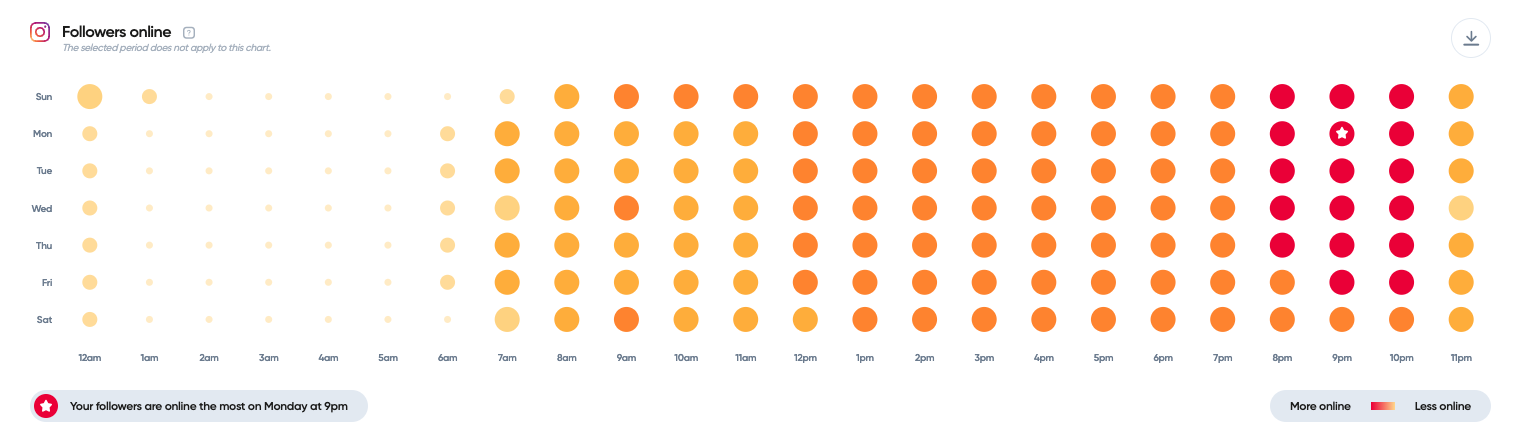
The practical takeaway: timing does not replace content quality, but it amplifies it. A well-crafted Reel posted at the wrong hour will underperform a decent one published when your followers are online. Treating your posting schedule as a strategic tool — not an afterthought — is what separates consistent growth from inconsistent results.
Worst Times to Post on Instagram in 2026
Knowing when not to post is just as valuable as knowing the peak posting hours. Publishing during low-activity windows means your content enters a quiet feed, gathers minimal early engagement, and signals to the Instagram algorithm that it is not worth distributing further.
The consistently weakest windows in 2026 data include:
- 12 AM – 5 AM (any day): The vast majority of followers are asleep. Posts published during this window accumulate almost zero engagement in the critical first hour, making algorithmic recovery nearly impossible.
- Monday 6 – 10 AM: Users prioritize email, commute logistics, and work tasks. Instagram scrolling is minimal, and the few users online are rushing through their feeds.
- Friday 8 PM onward: Most users shift to in-person social activities or streaming. Feed attention drops sharply after dinner hours on Fridays.
- Saturday all day (especially 6 – 9 AM): Saturday morning is the single worst posting window across multiple studies. Casual scrolling begins around 10 AM, but engagement remains moderate compared to any weekday.
- Sunday before 11 AM: Church, family routines, and late weekend wake-ups keep most audiences offline until late morning.
Warning: Saturday consistently ranks as the worst day for Instagram engagement across all major platforms' data. If you must post on Saturday, stick to the 10 AM – 1 PM window and use casual, community-oriented content. Avoid launching campaigns or high-priority content on this day.
The Early Morning Counterpoint
Some studies have flagged very early morning slots (3 – 5 AM) as potential low-competition windows where content can build momentum before the feed fills up. The logic is sound in theory — fewer posts competing means higher relative visibility. However, the data shows this is a high-risk strategy. The audience volume at 4 AM is so small that even reduced competition cannot compensate for the lack of real engagement signals.
The exception is accounts with highly international audiences, where 4 AM in one time zone coincides with 12 PM in another. In that specific case, early morning posting can work — but it requires deliberate timezone-aware scheduling, not guesswork.
For any content that matters — product launches, collaborations, or carefully produced Reels — midweek daytime or evening windows remain the safest bet. Reserve off-peak experiments for lower-stakes content like reposts, Stories, or casual behind-the-scenes clips.